Describing your voice to AI and actually sounding like yourself turn out to be two very different things — here’s the gap, and what closes it.
If you ran last week’s Friction Audit, you may have found plenty of places where AI was doing too much, or too little. But there’s one kind of friction that doesn’t show up as a gap in judgment — it shows up as a feeling: the output is technically fine, and still not you.
I used to hand AI a lot of direction before I’d let it near a draft. The topic, the theme, the throughline — I’d map it all out first, then work through the piece with it line by line.
Back then, it would actually ask me things. “How do you like to write? Are you descriptive? Are you poetic?” Simple questions, and I’d answer them honestly. Yes, descriptive. Yes, poetic — writing poetry had been a real passion of mine at one point, so that was true.
The problem was what came back. The prose was often too poetic. It didn’t match what I was actually trying to say. I’d ask for a business newsletter and get something reaching for lyricism the context didn’t call for. Other times, depending on how I’d answered that day, the output swung the other way — more academic, more formal than the moment needed.
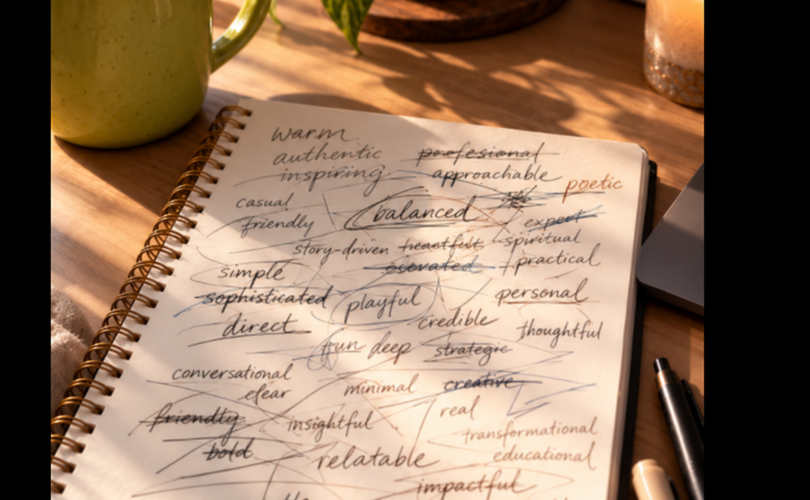
Both were “accurate,” in a sense. I had said poetic. I had gone through academic stretches. The AI wasn’t wrong about me — it just had an adjective where it needed an example. “Poetic” could mean a hundred different things on the page. Which kind of poetic I meant — when, where, how much — was never going to show up in a word like that. It only shows up in the writing itself.
Something had to change. It wasn’t a better description — it was something I wasn’t expecting at all.
Key Takeaways
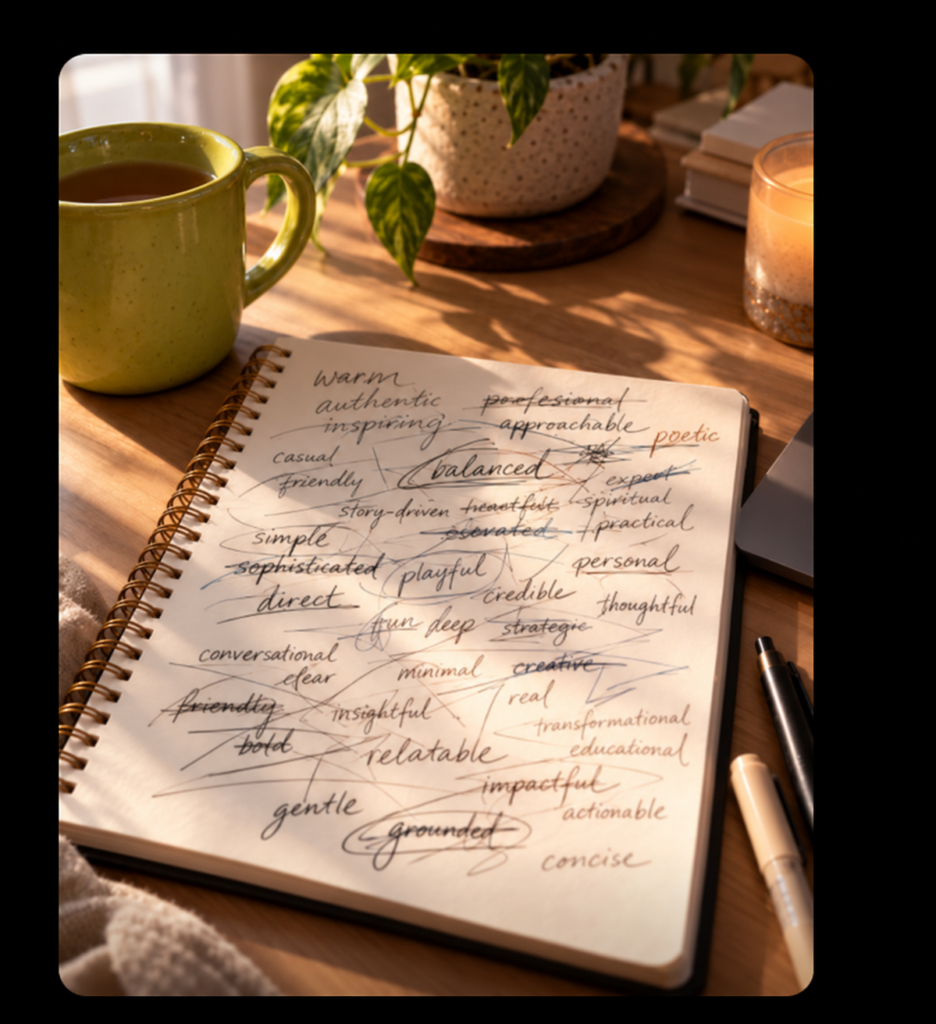
- Describing your voice in adjectives (“descriptive,” “poetic,” “professional”) gives AI a label, not a pattern — and labels are too broad to write from.
- Your actual writing already contains your voice: your rhythm, your word choices, where you slow down, where you cut a sentence short. That’s extractable. Adjectives aren’t.
- The fix isn’t better prompting. It’s giving AI real samples of your own writing to learn from, instead of describing yourself to it.
The Problem
Most of us start the same way I did: we try to tell AI how we write. Warm but direct. Conversational but credible. Poetic, but only sometimes. We’re not wrong about any of it — we just can’t hand over in three or four words what actually took years to become.
So the output comes back “fine.” Competent. Polished, even. And not quite you. You end up doing the real work anyway — rewriting the parts that sound like a stranger wearing your name, smoothing over the parts that overshot (too poetic) or undershot (too stiff, too academic) what the moment needed. That’s its own kind of tiring: you still have to re-explain yourself, piece by piece, draft after draft.
The Evidence
The shift, for me, wasn’t a better description. It was dropping the adjectives entirely and working from actual samples of my own writing instead — pieces from different contexts, written at different times, so the pattern could show up across variation rather than in one mood.
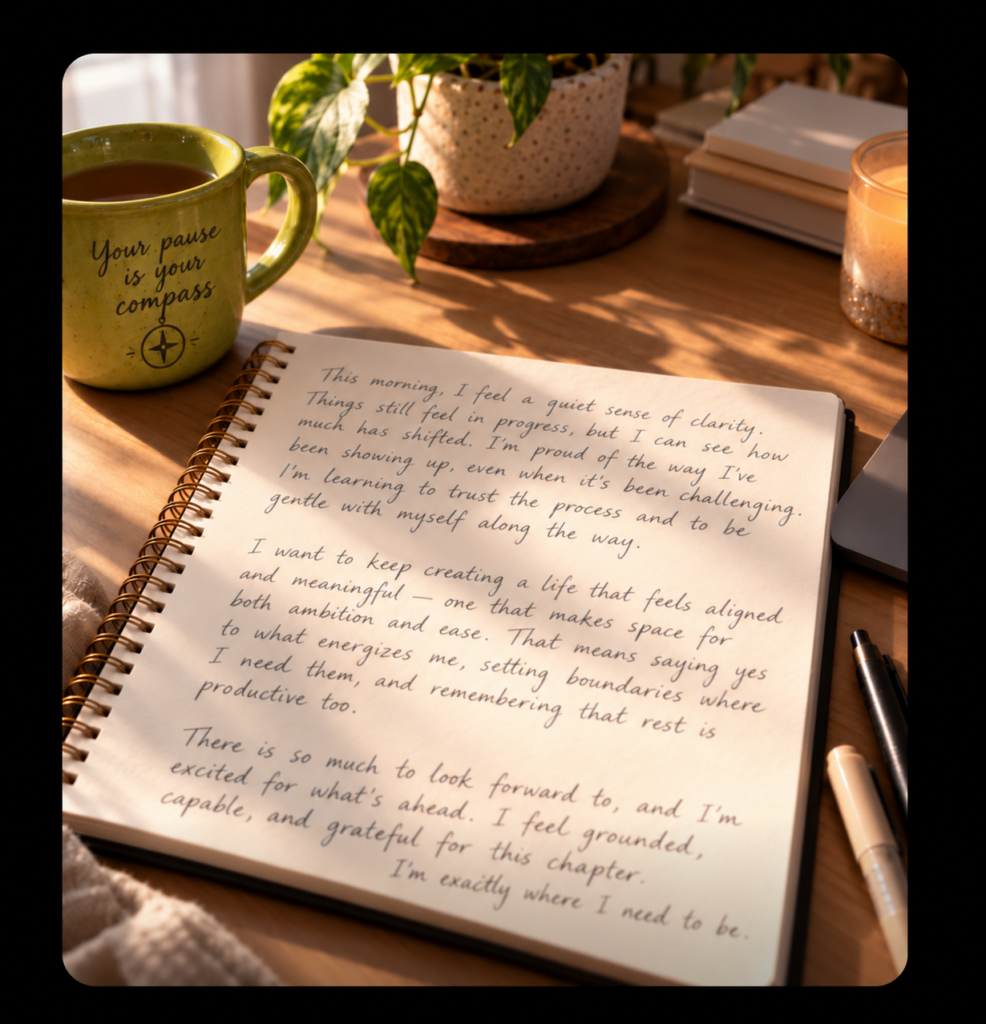
Voice isn’t a trait you can name. It’s a pattern you can only see by looking at enough real examples side by side — the sentence lengths you default to, the places you get specific versus the places you generalize, the rhythm you fall into without noticing. That pattern is in the writing. It was never going to be in a word like “poetic.”
A style guide is a description of your voice. Real writing samples are your voice. One is someone’s best attempt to summarize water; the other is the water.
The Solution
This is the whole idea behind what I call a Personal Scribe: instead of describing your voice to AI, you build it a reference made of your actual writing. Not a style sheet. Not a list of adjectives. The real thing, pulled from pieces you’ve already written, so AI has something to actually learn from instead of something to guess from.
Where do those writing samples come from? For most of us, they’re sitting in the same place — your own past posts, newsletters, notes, whatever you’ve already written in your own words. That collection is the start of what I think of as your AI Brain: a library of your own material, plus anything else you choose to keep in it. It’s a separate project of its own — for now, the only part that matters is that your Scribe draws from real writing you’ve already done.
FAQ
Do I need to be a “good writer” for this to work?
No. You need writing that’s actually yours — rough drafts count, unpolished notes count. The pattern is still there even when the writing isn’t perfect.
What if my writing style has changed over time — like it did for me?
That’s useful information, not a problem. A range of samples from different periods helps show what’s consistent underneath the shifts, which is usually closer to your real voice than any one phase of it.
Isn’t this just a more detailed style guide?
No — a style guide describes your voice in words. A Scribe is built from the voice itself. That’s the difference between telling someone about water and handing them a glass of it.
The Close
I spent a long time trying to get the description right — the exact right adjectives, the exact right instructions — before I realized the description was never going to be enough. The writing I’d already done had the answer the whole time.
If you’re tired of re-explaining yourself to AI every time you sit down to write, you don’t need a better set of instructions. You need to stop describing your voice and start handing over the real thing.
Build Your Personal Scribe — my self-paced training is live now on Kit for $44. It walks you through turning your own writing into something AI can actually learn from, instead of guess from.
Your pause is your compass.
This is part of Agentic AI and the Human Advantage, a weekly series on staying the author of your own work as AI takes on more of the labor.